
A domestic violence charge in Oklahoma can affect your firearm rights, but an arrest alone does not automatically create a permanent ban. A qualifying protective order, misdemeanor domestic violence conviction, felony conviction, or separate court condition may restrict your ability to receive or possess firearms. Federal restrictions can apply even if Oklahoma law does not impose an identical prohibition, and they can cover ammunition as well as guns.
If you face allegations in Stillwater, Payne County, or nearby Oklahoma communities, review your court paperwork and obtain legal advice before buying, storing, handling, or transferring a firearm. Your next steps depend on the exact charges, orders, and criminal history involved.
Does a Domestic Violence Charge Automatically Take Away Your Gun Rights?
No. Being accused or arrested does not, by itself, establish a permanent firearm prohibition under 18 U.S.C. § 922(g)(9). The legal position may change if you become subject to a qualifying protective order, receive a disqualifying conviction, or face firearm restrictions imposed as bond or release conditions.
A separate federal rule generally restricts receipt of firearms or ammunition by a person under indictment for a crime punishable by imprisonment for more than one year. That does not mean every pending misdemeanor domestic violence charge triggers the same rule. Ownership, possession, receipt, and carrying are distinct legal questions.
Read more about your procedural protections: https://www.jvmlaw.com/rights-of-the-accused/

James V. Murray
Oklahoma Attorney

Spencer Allred, Esq.
Oklahoma Attorney
How Does a Misdemeanor Domestic Violence Conviction Affect Gun Ownership?
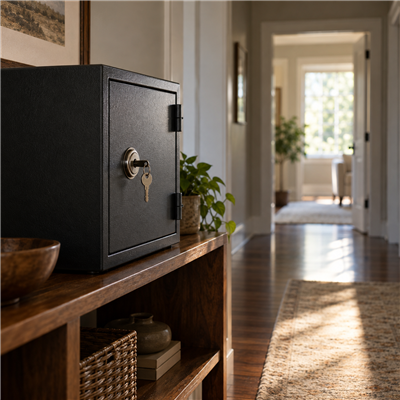
Under 18 U.S.C. § 922(g)(9), a person convicted of a qualifying misdemeanor crime of domestic violence is generally prohibited from possessing firearms or ammunition. This rule is often called the Lautenberg Amendment.
Whether a conviction qualifies depends on the offense and the applicable statutory definition, including the required use or attempted use of physical force, or threatened use of a deadly weapon, and a qualifying relationship with the victim. Such relationships can include current or former spouses, co-parents, certain people who lived together, and qualifying dating partners. Not every misdemeanor involving relatives satisfies the federal definition.
A guilty plea may count as a conviction even if the sentence involves probation instead of incarceration. The specific plea, offense elements, procedural protections, and relationship must be reviewed before you agree to resolve the case.
What Happens After a Felony Domestic Violence Conviction?
Federal law under 18 U.S.C. § 922(g)(1) generally prohibits possession of firearms by people convicted of offenses punishable by more than one year of imprisonment, subject to statutory definitions and exceptions. Oklahoma also restricts firearm possession by people with qualifying felony convictions under 21 O.S. § 1283. A felony conviction may therefore trigger multiple, independent restrictions, regardless of whether the offense involved domestic abuse.
Can a Protective Order Prevent You From Possessing a Gun?
Yes. Under 18 U.S.C. § 922(g)(8), certain domestic violence protective orders can prohibit firearm and ammunition possession even without a criminal conviction. Generally, the order must meet all of the following conditions:
- It was issued after a hearing for which you received actual notice and an opportunity to participate.
- It restrains specified harassment, stalking, threats, or conduct placing an intimate partner or child in reasonable fear of bodily injury.
- It includes a qualifying credible-threat finding or expressly prohibits the specified use, attempted use, or threatened use of physical force.
An initial emergency order issued without notice and an opportunity for a hearing does not automatically satisfy this federal provision. Other laws, court orders, or release conditions may still apply. Read the exact language of any order before taking action.
In United States v. Rahimi (2024), the U.S. Supreme Court rejected a facial Second Amendment challenge to § 922(g)(8), explaining that the government may temporarily disarm a person found by a court to pose a credible threat to another person’s physical safety. The decision did not resolve every possible challenge to every application of the statute.
A qualifying protective order can affect firearm possession even when a criminal case is still pending.
Learn about responding to these proceedings: https://www.jvmlaw.com/protective-order-defenses/
Criminal Defense Case Results
What Does Oklahoma Law Say About Domestic Violence and Firearms?
Oklahoma generally permits eligible adults to carry firearms without a state handgun license, but this state policy does not override federal restrictions. A domestic violence misdemeanor or protective order must be assessed against the specific federal provisions and any applicable state or court-imposed restrictions.
Under 22 O.S. § 60.8, an Oklahoma peace officer must seize a weapon or instrument when the officer has probable cause to believe it was used to commit an act of domestic abuse, with an arrest made at the same time if possible. Following a seizure under that section, the district attorney must file the required notice of seizure and forfeiture within 10 days, or the statute directs return to the owner. A timely forfeiture action changes the process, and lawful possession requirements must still be satisfied before any return.
A seizure following an alleged incident is different from a long-term loss of firearm eligibility. The particular facts, the status of criminal proceedings, and relevant court orders govern what happens next.
Can You Keep Guns Purchased Before a Domestic Violence Case?
A firearm legally purchased before an arrest does not become exempt from a later possession restriction. Federal law may prohibit possession of previously owned rifles, shotguns, handguns, and ammunition. Possession can include constructive possession when you knowingly have both the ability and intent to exercise control over a weapon, even without holding it.
Firearms kept in a shared home, vehicle, or storage area can raise access and control questions. Moving a weapon to another room or having another person hold it is not necessarily sufficient. Speak with counsel about any proposed transfer or storage arrangement before acting.
What Should You Do if You Face Domestic Violence Charges and Own Firearms?
- Read your bond conditions, protective orders, and other court documents for weapon restrictions.
- Avoid possessing or accessing firearms and ammunition when a legal restriction applies.
- Comply with any no-contact requirements and preserve messages, photographs, and other relevant evidence.
- Ask an attorney to evaluate firearm consequences before entering a plea or arranging a transfer.
- Request clarification through appropriate legal channels if an order is unclear.
You can also review the firm’s guidance for people https://www.jvmlaw.com/arrested-for-domestic-violence/.
Can You Restore Gun Rights After a Domestic Violence Conviction?
Restoration depends on the precise disqualification and the legal effect of any pardon, expungement, set-aside, or other recognized relief. Sealing a record does not necessarily remove the conviction for federal firearm purposes. Likewise, the expiration of a protective order does not eliminate an independent conviction-based restriction.
Federal law includes a narrow five-year provision for certain people with no more than one qualifying misdemeanor domestic violence conviction involving a dating partner. In general, the period runs from the later of the conviction or completion of the custodial or supervisory sentence. The exception has additional conditions concerning subsequent convictions and disqualifications and does not apply to several categories of domestic relationships, including spouses and co-parents. The dating-partner expansion applies to convictions occurring on or after June 25, 2022.
Do not assume that time passing or an Oklahoma record-sealing order automatically restores eligibility. An attorney can review the specific documents before you attempt to buy or possess a firearm.
How Can a Criminal Defense Attorney Help Protect Your Rights?
A criminal defense attorney can assess the evidence, review witness accounts and police reports, examine protective-order requirements, and explain the firearm consequences of potential outcomes. An attorney can also help you understand how a proposed plea could affect your long-term options.
For guidance about criminal charges in Stillwater and surrounding communities, visit https://www.jvmlaw.com/stillwater-criminal-defense-attorney/.
Frequently Asked Questions About Domestic Violence and Gun Rights in Oklahoma
Can I Buy a Gun While Domestic Violence Charges Are Pending?
Not necessarily. A pending misdemeanor charge alone does not automatically establish a conviction-based federal prohibition. A qualifying protective order, an indictment for certain serious offenses, or another disqualification can change eligibility. Obtain case-specific advice before attempting a purchase.
Does a Dismissed Domestic Violence Charge Restore Gun Rights?
A dismissal can resolve consequences tied only to that charge, but a separate protective order, earlier conviction, or other disqualification may still apply.
Does a Domestic Violence Misdemeanor Mean a Lifetime Gun Ban?
A qualifying conviction generally creates a continuing federal restriction unless recognized relief or a statutory exception applies. Certain qualifying first-time dating-partner convictions may fall within the narrow federal five-year provision described above.
Can I Possess a Hunting Rifle After a Domestic Violence Conviction?
A qualifying federal prohibition generally covers rifles, shotguns, handguns, and ammunition. Intended hunting use does not ordinarily create an exemption.
Does Oklahoma Constitutional Carry Override Federal Restrictions?
No. Oklahoma carry rules do not allow a person who is federally prohibited from possessing firearms to possess them.

Mr. Murray and his team were very professional and helpful throughout this process. As my case was very unique, I knew I was going to need a very specific and special team to help me through this. My wife and I prayed about it and God led us to Murray Law Firm. During the first consultation I requested he pray with me about it and he was quick to agree and that is when I knew we had made the right decision. They went above and beyond our expectations and won the case. I would highly recommend this firm.”
- Roger Buchanan
The Murray Law Firm worked wonders for me and my needs. James Murray along with his staff are so helpful, understanding, and answered all my questions and concerns. James was able to work his magic and get things done in such a timely manner. James even made his self available by phone after hours when I was in such need. He put not only mine but my whole families worries and concerns at ease. Would highly recommend James Murray to anyone searching for a very good attorney!"
- Tiara Rich
Jamie is personal yet professional. He can put you at ease and make you feel safe and secure. He will be at your side through this most difficult time in your life and will keep you informed about what is going on in your case and what you can expect. His staff is always ready and willing to do everything the can to help you. Highly recommended."
- Alicia Mayfield
Speak With a Stillwater Criminal Defense Attorney About Your Gun Rights
If you face a domestic violence allegation, a protective order, or questions about firearm possession, Murray Law Firm can review your situation and explain the available legal options. The firm provides criminal defense representation in Stillwater, Payne County, and nearby Oklahoma communities.
Visit https://www.jvmlaw.com/contact-us/ to request a confidential consultation. Discuss court conditions and firearm access with counsel before taking action.
This article provides general information, not legal advice. Firearm restrictions depend on the facts, court orders, and law applicable to your situation.
Legal References
18 U.S.C. § 922: https://www.law.cornell.edu/uscode/text/18/922
18 U.S.C. § 921 (definitions and dating-partner provision): https://www.law.cornell.edu/uscode/text/18/921
Oklahoma Statutes, Title 22, § 60.8: https://www.oklegislature.gov/OK_Statutes/CompleteTitles/os22.pdf
United States v. Rahimi (Supreme Court opinion): https://www.supremecourt.gov/opinions/23pdf/22-915_8o6b.pdf

