
Early darkness can make Oklahoma roads harder to navigate because reduced visibility can delay hazard recognition and leave less time to respond. When a collision occurs after sunset, poor lighting may influence how investigators determine negligence, assign fault, and evaluate an insurance claim. Oklahoma law requires drivers to use appropriate lighting and adjust their driving to road conditions, while comparative negligence rules can affect compensation. Murray Law Firm helps injured individuals in Stillwater, Oklahoma, understand how nighttime driving conditions may affect their car accident claims and legal options.
Why Does Early Darkness Increase Car Accident Risks in Oklahoma?
As autumn progresses into winter, Oklahoma drivers face shorter daylight hours. Evening commutes, school activities, shopping trips, and other routine travel may occur after sunset rather than during daylight.
In Stillwater, drivers traveling along Main Street, Perkins Road, or Highway 51 may encounter changing lighting conditions during busy traffic periods. These transitions can make it harder to recognize potential hazards.
Several factors contribute to nighttime accident risks:
- Reduced visibility: Drivers may have difficulty identifying vehicles, pedestrians, cyclists, and road obstacles.
- Headlight glare: Bright headlights from approaching traffic can temporarily interfere with a driver’s ability to see clearly.
- Limited peripheral vision: Darkness makes it more difficult to notice movement outside the central field of vision.
- Delayed hazard recognition: Drivers may need additional time to identify and respond to unexpected situations.
- Driver fatigue: Evening driving can coincide with tiredness after long workdays or extended travel.
Darkness alone does not establish negligence. A successful car accident claim generally requires evidence that another party failed to exercise reasonable care and that the failure caused injuries or other compensable losses.
Understanding that distinction is essential when pursuing compensation after a nighttime collision.
Key point: Poor visibility does not automatically excuse a collision. Driver conduct and supporting evidence help establish responsibility.
How Does Darkness Affect Fault in an Oklahoma Car Accident?
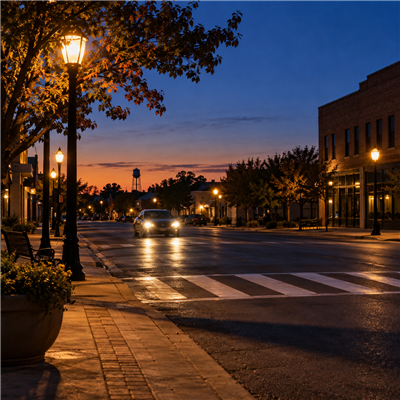
Establishing fault is one of the most significant challenges in a nighttime car accident claim.
Oklahoma negligence law generally examines whether a driver owed a duty of reasonable care, breached that duty, and caused injuries and damages.
Reduced visibility does not automatically excuse unsafe driving. Motorists must adjust their behavior to conditions they can reasonably anticipate.
For example, a driver approaching an intersection after sunset may need to exercise greater caution when visibility is limited.
Potential evidence of negligence includes:
- Driving too fast for the available visibility.
- Failing to activate required headlights.
- Following another vehicle too closely.
- Making unsafe turns across approaching traffic.
- Failing to yield the right of way.
- Driving while distracted or fatigued.
Consider a hypothetical collision in Stillwater. A motorist turns left across an intersection during early evening hours and strikes an approaching vehicle.
The turning driver claims that darkness made the approaching vehicle difficult to see. Investigators may examine whether the turning driver maintained a proper lookout, whether the approaching vehicle had working headlights, and whether either motorist violated traffic laws.
The outcome depends on the evidence, not simply the time of day.
Learn more about Oklahoma car accident laws and shared fault in the firm’s guide: Understanding Car Accident Laws in Oklahoma
Oklahoma Headlight Laws and Their Role in Accident Claims
Headlight use can become a central issue when determining responsibility for a collision after sunset.
Under Oklahoma Statutes Title 47, Section 12-201, drivers generally must display required vehicle lighting from one-half hour after sunset until one-half hour before sunrise, as well as during certain conditions involving insufficient visibility.
These requirements establish legal obligations, but safe driving may require headlights even before the statutory nighttime period begins.
During the transition between daylight and darkness, drivers should consider whether surrounding conditions make their vehicles difficult to see.
Headlight-related issues that may affect a claim include malfunctioning headlights, improperly adjusted beams, failure to use required lighting, and failure to dim high beams when legally required.
For instance, a driver involved in a crash may argue that another vehicle was nearly invisible because its headlights were not illuminated.
Investigators would need to determine whether headlights were legally required at that moment and whether the alleged lighting failure contributed to the collision.
A traffic violation can provide evidence of negligence, but liability still depends on the circumstances and the relationship between the violation and the resulting harm.
Personal Injury Case Results
Can Both Drivers Share Fault in a Nighttime Accident?
Yes. Oklahoma follows a modified comparative negligence system, meaning more than one person may share responsibility for a collision.
Under Oklahoma Statutes Title 23, Sections 13 and 14, an injured person’s recovery may be reduced according to their percentage of fault. If their negligence is greater than the combined negligence of the other responsible parties, recovery is generally barred. A share of fault of 50% does not by itself bar recovery.
Consider a hypothetical nighttime intersection collision involving two drivers.
One driver fails to yield while turning left. The approaching driver has defective headlights that contribute to the collision.
After reviewing the evidence, a factfinder determines that the turning driver bears 70% responsibility and the approaching driver bears 30%.
If the approaching driver has $50,000 in legally recoverable damages, their 30% share of fault would reduce compensation to $35,000.
This example illustrates comparative negligence rather than predicting the outcome of any particular claim.
Nighttime collisions frequently involve disputes about visibility, speed, lighting, and driver awareness. The assessment must consider all relevant evidence.
Oklahoma’s comparative negligence statute is also relevant when fault is shared.
Related Videos
Personal Injury Representation
Car Accident Representation
Why Is Evidence Especially Important After a Nighttime Car Accident?
Accidents occurring after dark may create additional challenges for investigators, insurers, and injured motorists.
Witnesses may struggle to identify vehicle colors, estimate speeds, or describe movements accurately. Photographs may lack detail because of poor lighting, and physical evidence can disappear before an investigation begins.
Preserving evidence can help establish what happened.
Useful documentation may include:
- Accident scene photographs showing road conditions, lighting, vehicle positions, and damage.
- Police reports containing observations, statements, and preliminary findings.
- Dashcam or surveillance footage showing the vehicles before impact.
- Witness contact information and statements about lighting or driving behavior.
- Vehicle inspection records documenting headlight condition and mechanical defects.
- Medical records connecting reported injuries to the collision.
Photographs taken under similar lighting conditions may help explain visibility, although they cannot perfectly recreate what a driver could see.
An attorney may also examine nearby businesses for surveillance footage or consult an accident reconstruction specialist when disputed visibility makes liability difficult to establish.

Mr. Murray and his team were very professional and helpful throughout this process. As my case was very unique, I knew I was going to need a very specific and special team to help me through this. My wife and I prayed about it and God led us to Murray Law Firm. During the first consultation I requested he pray with me about it and he was quick to agree and that is when I knew we had made the right decision. They went above and beyond our expectations and won the case. I would highly recommend this firm.”
- Roger Buchanan
The Murray Law Firm worked wonders for me and my needs. James Murray along with his staff are so helpful, understanding, and answered all my questions and concerns. James was able to work his magic and get things done in such a timely manner. James even made his self available by phone after hours when I was in such need. He put not only mine but my whole families worries and concerns at ease. Would highly recommend James Murray to anyone searching for a very good attorney!"
- Tiara Rich
Jamie is personal yet professional. He can put you at ease and make you feel safe and secure. He will be at your side through this most difficult time in your life and will keep you informed about what is going on in your case and what you can expect. His staff is always ready and willing to do everything the can to help you. Highly recommended."
- Alicia Mayfield
How Do Insurance Companies Evaluate Accidents After Dark?
Insurance adjusters typically examine the available evidence before deciding whether to accept liability, dispute fault, or offer compensation.
In nighttime crashes, insurers may question whether the driver claiming compensation was properly using headlights, maintaining a safe speed, or paying attention.
These questions can influence comparative negligence assessments.
An insurer might argue that an injured driver should have seen another vehicle despite limited lighting. Alternatively, the insurer may claim that a vehicle without functioning headlights contributed to the collision.
Neither argument establishes fault without supporting evidence.
Insurance companies may also dispute the extent of injuries, medical expenses, lost income, or the relationship between the accident and a person’s symptoms.
Accident victims should avoid speculating about visibility, accepting unsupported allegations of fault, or agreeing to a final settlement before understanding their injuries and financial losses.
People evaluating an insurer’s offer may benefit from speaking with an attorney before agreeing to a final settlement.
What Compensation May Be Available After a Nighttime Collision?
Early darkness does not independently increase or decrease the amount of compensation available in an Oklahoma car accident claim.
The potential value depends on the injuries, financial losses, applicable insurance coverage, available evidence, and each party’s share of fault.
Depending on the circumstances, recoverable damages may include:
- Medical expenses, including emergency treatment, rehabilitation, and reasonably necessary future care.
- Lost wages resulting from the inability to work.
- Reduced future earning capacity when lasting injuries affect employment.
- Property damage involving a vehicle or personal belongings.
- Physical pain and suffering associated with the injuries.
- Emotional distress and other legally recognized noneconomic losses.
For example, a Stillwater resident injured in a nighttime rear-end collision may require medical treatment and miss several weeks of work.
If another driver’s negligence caused the collision, those documented losses may form part of a compensation claim.
Every case requires an individualized assessment. Medical evidence, liability findings, applicable law, and insurance limits can affect the final outcome.
What Should You Do After a Car Accident in the Dark?
Taking reasonable steps after a nighttime collision can protect your health and preserve information that may become valuable during an insurance investigation.
- First, check for injuries and contact emergency services when appropriate. Avoid standing in active traffic, and move to a safer location when it is possible to do so without creating additional danger.
- Seek medical attention when injuries are suspected, even when symptoms initially seem manageable.
- If conditions permit, document vehicle damage, surrounding lights, traffic signals, road markings, and any visible obstacles.
- Exchange the necessary information with other drivers and obtain witness contact details. Report the accident to law enforcement when required.
- Notify the appropriate insurance company, provide accurate factual information, and retain copies of relevant communications.
- Keep medical bills, treatment records, repair estimates, employment documentation, and receipts connected to the collision.
- Finally, consider speaking with a Stillwater car accident attorney before resolving a disputed or significant injury claim.
How Long Do You Have to File a Nighttime Car Accident Claim in Oklahoma?
Oklahoma generally provides a two-year statute of limitations for personal injury lawsuits arising from vehicle collisions under Title 12, Section 95(A)(3).
The filing period ordinarily begins on the date of the injury, although exceptions and special rules may apply.
Claims involving government entities can have separate, substantially shorter notice requirements. Insurance policies may also impose reporting obligations that differ from lawsuit filing deadlines.
Waiting can create practical difficulties even when the legal deadline has not expired.
Surveillance footage may be overwritten, witnesses may become unavailable, and evidence about the original lighting conditions may become harder to obtain.
Consulting an attorney early can help injured individuals understand applicable deadlines and preserve relevant evidence.
Frequently Asked Questions About Early Darkness and Oklahoma Car Accidents
Does darkness automatically make a driver responsible for an accident?
No. Darkness is an environmental condition, not an automatic determination of negligence. Liability depends on whether a driver failed to exercise reasonable care and whether that failure contributed to the accident.
Can I recover compensation if my headlights were not turned on?
Possibly. The answer depends on whether headlights were legally required, whether their absence contributed to the crash, and how fault is allocated under Oklahoma law.
What if the other driver says they could not see my vehicle?
That explanation does not automatically excuse the collision. Investigators may assess vehicle lighting, speed, road conditions, driver attention, and whether reasonable precautions could have prevented the accident.
Can a nighttime car accident claim settle without going to court?
Yes. Many car accident claims are resolved through insurance negotiations without a trial. A settlement should reflect the available evidence and the claimant’s legally recoverable losses.
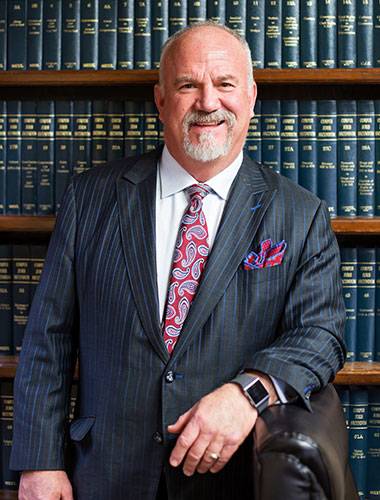
James V. Murray
Oklahoma Attorney
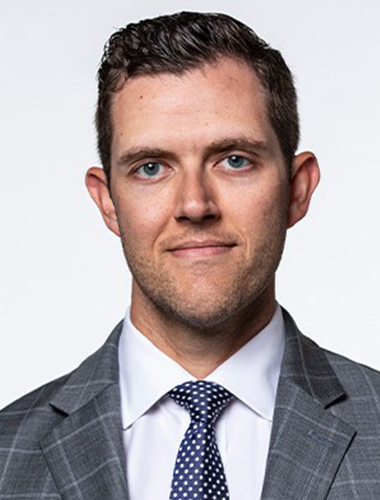
Spencer Allred, Esq.
Oklahoma Attorney
Speak With a Trusted Stillwater Attorney About Your Car Accident
A collision during early darkness can leave injured motorists facing medical expenses, vehicle repairs, missed work, and uncertainty about responsibility.
Murray Law Firm helps people in Stillwater, Oklahoma, assess car accident claims, investigate disputed liability, and understand their options for pursuing compensation under Oklahoma law.
If you have been injured in a nighttime collision, contact Murray Law Firm to request a consultation and discuss your circumstances with its Stillwater office.
This article is for informational purposes only and is not legal advice. Consult an attorney about your specific situation.

