
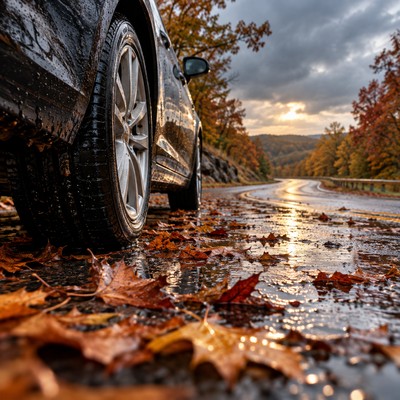
Wet leaves can affect fault after an Oklahoma car accident, but they do not automatically make the road, the weather, or another driver responsible. Fault usually depends on whether each driver acted reasonably for the conditions, including speed, following distance, visibility, braking, and control of the vehicle.
Oklahoma also follows a modified comparative negligence rule, which means more than one person may share responsibility for a crash. If you are found partly at fault, your compensation may be reduced by your percentage of fault. If your negligence is greater than the combined negligence of the parties who caused the damage, you may be prevented from recovering compensation.
Wet leaves may matter because they can reduce traction, hide pavement markings, and make stopping or turning less predictable. The key question is whether a driver knew, or reasonably should have known, that the road required extra caution and adjusted accordingly.
Murray Law Firm helps people in Stillwater, Oklahoma, and nearby areas evaluate evidence after car accidents involving rain, wet leaves, slippery roads, and disputed fault.

Why Wet Leaves Can Matter in an Oklahoma Car Accident Claim
Wet leaves can make pavement slippery, especially when rainwater becomes trapped between the leaves and the roadway. Tires may have less direct contact with the pavement, which can affect braking and steering.
A vehicle may:
Take longer to stop.
Lose traction while turning.
Slide during sudden braking.
Drift outside its lane.
Have more difficulty responding to an unexpected hazard.
Leaves may collect near curbs, intersections, shoulders, curves, and shaded areas where moisture can remain longer.
The presence of wet leaves can help explain road conditions, but it does not automatically establish legal responsibility. Fault still depends on what each driver did before and during the crash.
Drivers May Need to Slow Down Even Below the Speed Limit
Driving at or below the posted speed limit does not always mean a driver was traveling safely.
Oklahoma law requires drivers to operate at a careful and prudent speed that is reasonable for the road, traffic, surface, and other existing conditions. A driver may need to travel below the posted limit when rain, wet leaves, limited visibility, traffic, or other hazards make the roadway less predictable.
For example, consider a driver approaching a curve in Stillwater after rainfall. Wet leaves cover part of the roadway. The driver enters the curve at the posted speed, loses traction, crosses the center line, and collides with another vehicle.
The fact that the driver was not exceeding the posted speed limit does not automatically resolve fault. The investigation may focus on whether a reasonably careful driver would have reduced speed before entering the curve.
The same issue can arise in a rear-end crash. If a vehicle ahead stops for traffic and the following vehicle slides on wet leaves, the driver who slid may argue that the road caused the collision. The investigation may still examine whether that driver left enough following distance to stop safely under the conditions.
You can learn more about car accident claims here:
https://www.jvmlaw.com/stillwater-car-accident-attorney/

James V. Murray
Oklahoma Attorney

Spencer Allred, Esq.
Oklahoma Attorney
Can Both Drivers Be at Fault?
Yes. Oklahoma uses a modified comparative negligence system, which allows responsibility for an accident to be divided among multiple parties.
For example, suppose one driver attempts a left turn at an intersection while another vehicle approaches on a wet, leaf-covered road. The turning driver may be accused of failing to yield. The approaching driver may also be accused of traveling too fast for the conditions.
In that situation, both drivers could potentially share fault.
If you are found partly responsible for a collision, your percentage of fault may reduce the compensation available to you. Oklahoma law also provides that a person whose negligence is greater than the combined negligence of the parties causing the damage may be barred from recovery.
For that reason, saying, “I slid, so the accident was not my fault,” does not settle the issue.
Sliding may explain what happened to the vehicle. It does not establish whether the driver acted reasonably before the slide began.
Oklahoma’s comparative negligence statute is available here:
https://oksenate.gov/sites/default/files/2019-12/os23.pdf
What Evidence Can Show Whether Wet Leaves Contributed to the Crash?
Road conditions can change quickly after an accident.
Leaves may dry, blow away, scatter under passing traffic, or be removed. Rain may stop shortly after the crash. A roadway that was slippery at the time of the collision may look very different later.
That makes early documentation valuable.
If it is safe to gather information, useful evidence may include:
Wide photographs showing the road, curve, intersection, or shoulder.
Close photographs of wet or matted leaves.
Video showing roadway and traffic conditions.
Tire marks or skid marks.
Vehicle damage.
Final vehicle positions.
Witness names and contact information.
Dash camera footage.
Nearby security or surveillance footage.
The police accident report.
Tire condition and tread depth.
Weather information from the time of the collision.
A police report may note that the roadway was wet or describe the weather, but it may not capture every detail that later becomes relevant.
Photographs showing where the leaves were located in relation to the vehicles can help show whether the road condition contributed to the crash.
How Insurance Companies May Use Wet Leaves in a Fault Dispute
Insurance companies may use slippery road conditions in different ways.
An adjuster may argue that the accident was unavoidable because the roadway was slick. In another case, the insurer may argue that an injured driver should have slowed sooner, left more following distance, or reacted differently.
Neither position should be accepted without reviewing the full circumstances.
Questions that may matter include:
Were the leaves visible before the driver reached them?
Was it raining at the time?
Had the rain recently stopped?
Did nearby vehicles travel through the same area without losing control?
Was the driver braking, turning, or accelerating when traction was lost?
Was the driver following another vehicle too closely?
Were the tires worn?
Was the driver distracted?
Was there another hazard beneath the leaves?
What do photographs, vehicle damage, video, and witness statements show?
An insurer may focus on one fact that supports its position. A complete fault analysis should consider all available evidence.
You can learn more about insurance company issues after a crash here:
https://www.jvmlaw.com/dealing-with-insurance-companies/
What If Your Vehicle Was the One That Slid?
If your vehicle slid on wet leaves, you should not automatically assume that you caused the accident.
Another driver may have created a sudden hazard that left little time to react.
For example, another vehicle may have:
Pulled into your lane unexpectedly.
Failed to yield at an intersection.
Stopped suddenly without working brake lights.
Made an unsafe turn.
Forced you to take evasive action.
Wet leaves may have reduced your ability to avoid the collision, but the other driver’s conduct can still matter.
At the same time, wet leaves do not automatically excuse a loss of control. An insurer may review your speed, following distance, tire condition, braking, steering, and attention before the vehicle started sliding.
Fault often depends on what happened several seconds before impact, not only what happened at the moment of the collision.
Can Poor Tire Condition Affect Fault?
Yes. Tire condition can become relevant when a driver claims that wet leaves caused a loss of traction.
Worn tires may have less grip on wet surfaces. If tire tread is badly worn, an insurance company may argue that the vehicle was not reasonably maintained.
Brakes, windshield wipers, headlights, and other vehicle components may also become relevant when they affect a driver’s ability to respond safely to road and weather conditions.
Poor vehicle condition does not automatically make a driver responsible for a crash. It is one factor among many that may need to be evaluated.
What Compensation May Be Available After a Wet-Leaf Accident?
If another driver’s negligence caused the crash, you may be able to pursue compensation for losses related to your injuries and property damage.
Depending on the facts of the case, compensation may include:
Medical expenses.
Future medical treatment.
Lost wages.
Reduced earning ability.
Property damage.
Pain and suffering.
Other accident-related financial losses.
The value of a claim depends on the injuries, available insurance coverage, degree of fault, supporting evidence, and other case-specific facts.
You can learn more about potentially recoverable damages here:
https://www.jvmlaw.com/recoverable-damages-in-a-car-accident/
Why Early Investigation Can Matter
Wet-leaf accidents can become harder to evaluate because physical evidence may disappear quickly.
Sunlight may dry the road. Wind may move the leaves. Traffic may scatter them. Road crews may clear the area before anyone documents what the roadway looked like when the collision happened.
Early investigation may help preserve evidence such as:
Photographs.
Video.
Police reports.
Witness statements.
Vehicle damage.
Insurance information.
Medical records.
Dash camera footage.
Surveillance footage.
Vehicle data.
In some cases, the roadway may need to be inspected before the conditions change. An accident reconstruction professional may also be useful when the cause of the crash is disputed.
The purpose of the investigation is to determine whether the slippery road was the primary cause of the collision, whether driver conduct contributed, or whether responsibility should be divided among multiple parties.
Information about Attorney James Murray is available here:
https://www.jvmlaw.com/our-team/attorney-james-murray/
Speak With a Stillwater Car Accident Attorney
If you were injured in a crash involving wet leaves, rain, or another slippery road condition in Stillwater, Oklahoma, Murray Law Firm can review the circumstances and explain the legal and insurance issues that may affect your claim.
A careful review of the evidence can help separate the effect of the roadway from the decisions each driver made before the collision.
Contact the firm online for a consultation.
https://www.jvmlaw.com/contact-us/
Murray Law Firm serves clients in Stillwater, Oklahoma, and nearby areas.
This article is for informational purposes only and is not legal advice. Consult an attorney about your specific situation.