
Stillwater Alimony Attorney
Family Law Representation Throughout Payne County and Oklahoma State
Free Legal Consultation


No couples ever enter into a marriage with the thought that it will end in divorce. And the decision to divorce is almost never arrived at easily or quickly, as it is painful to divide a once loving, heartfelt union and break-up a family. Regardless of how the marriage unraveled, divorces are not only emotionally painful, but can be financially stressful as well. Amid pangs of heartache, anxieties lurk just below the surface about how one will be able to sustain themselves without the financial support of their partner.
Free Legal Consultation

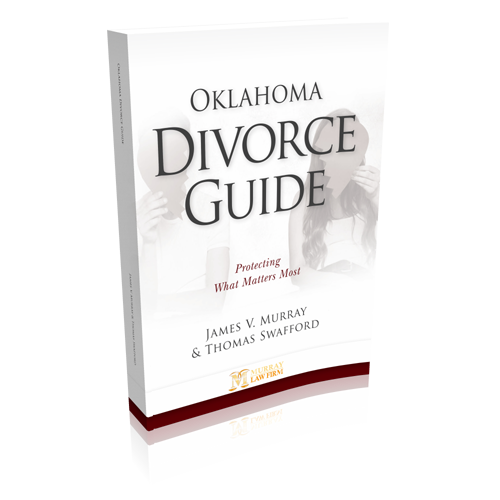
Get our FREE guide and start protecting what matters most.
Fortunately, Oklahoma law makes provisions for alimony, also called spousal support, to the financially needy spouse, which can help alleviate their monetary fears as they set forth to begin their new life. However, it is often extremely rare that the party paying the alimony does so without the prompting of an opposing spouse’s attorney, or in many cases, a court mandate.

At our office, we encourage couples to try to work out their differences when possible and view divorce as a last resort option only. We also recognize that when divorce becomes the only option, you need a skilled and aggressive Oklahoma alimony attorney, sympathetic to your needs that will assist you to ensure that you are armed with adequate financial protection as you move forward with your new life.
We have guided thousands of people through their divorces and are well versed in addressing and handling all spousal support and alimony issues. Some of the most common topics about alimony that we frequently address are set forth below.
“I used James Murray for my divorce after 25 years. This has been my only time I’ve needed a attorney. James was one of the best decisions I’ve made besides the divorce. He went above and beyond. I got everything I wanted plus. I have since sent many of my friends that need a attorney for any reason. James I thank you very much and will refer you because I believe you are the best in town.”
In Oklahoma, alimony generally consists of monthly payments made by a financially secure spouse to the needy spouse, to provide them financial support during and/or after the divorce. The general aim behind spousal support is to harmonize the parties’ incomes to ensure that each spouse is able to live in a lifestyle or manner as they were accustomed to before the separation or divorce. Alimony is not gender specific, as it may be awarded to the husband or the wife, and is also available to same-sex couples as well. If you have questions about alimony in Oklahoma, contact an experienced Stillwater alimony attorney at our firm.
Oklahoma law recognizes two types of alimony. The first, referred to as “spousal maintenance,” is temporary and payable from the time of separation until the final divorce is granted. The second type of alimony occurs post-divorce and is spelled out in the final divorce judgment. It may be short-term or long term.
The goal of short-term alimony is to provide financial support to the needy spouse until that party is able to financially provide for themselves again. It is commonly granted to parties who have been out of the workforce for an extended time period, or to those who need education, or special job training, that will permit them to earn and provide for themselves. Long-term alimony is most commonly awarded to a disabled spouse or an older spouse who has never been a part of the workforce, or who lacks a meaningful earning capacity.
Alimony is generally satisfied through regular monthly payments for a set amount, but can also be awarded in the form of a lump sum, or a property conveyance, such as the marital home, as well.
There is no predetermined formula that guides a court’s decision to award alimony. Nor is there a formula instructing the court how much to award. And courts only step in if negotiations between the parties fail and they cannot agree upon the terms or amount of alimony to be paid. Oklahoma case law delineates several factors and considerations to be weighed in determining the type and amount of alimony a party must pay. In many instances, the duration of the parties’ marriage will be the guiding factor in that determination. However, courts also consider the party’s needs, financial means, age, physical heath, educational background, earning capacity, manner of living to which the party was accustomed during the course of the marriage, the other party’s ability to pay, property distribution, and premarital property held by each spouse prior to the marriage.
Most notably absent for consideration is fault or misconduct that occurred during the marriage. This means that factors such as spousal abuse or adultery are not factored-in by courts in making an alimony determination.
Alimony awards may be modified. In order for a modification to occur, a party must petition the court for a modification and then demonstrate a “material change” in circumstances, which drastically decreases or increases the income or living expenses of one or both of the parties. Losing a high paying job or acquiring a permanent disability may be found to satisfy this standard. But remember, every case is unique and discretion is left in the hands of the court as to whether a specific circumstance amounts to a “material” change such that the original alimony award should be altered. If you are interested in getting your award of alimony modified, contact an experienced Stillwater alimony attorney at our firm.
There is no hard and fast rule as to when alimony will expire, apart from the death of either party or the remarriage of a receiving party. In cases where the party paying the alimony dies, the receiving spouse has a 90-day window to petition the estate to pay any unpaid back alimony that is then due and owing. If a spouse who receives alimony remarries, they have a 90-day window to petition the court not to terminate their alimony and must demonstrate good cause as to why their spousal support should continue.
There are a myriad of factors and circumstances that go into the determination of whether or not a party receives alimony, how much they are to receive, and how long it will last. Absent an agreement by the parties, alimony is never a guarantee if left up to the courts. If you are contemplating a divorce or already in the process, call us today so that we can address your alimony concerns and ensure that you get the best possible outcome that you deserve.
 What is support alimony?
Support alimony is intended to allow one spouse to transition economically after a divorce, cushioning the financial impact of moving from a married, potentially dependent household to a state of financial independence. The court considers factors including the requesting party’s need and the other spouse’s ability to pay, then makes a factual determination as to whether, and how much, alimony should be ordered.
Oklahoma recognizes several types of alimony, including temporary alimony (also called spousal maintenance), which provides support during the divorce proceedings themselves; rehabilitative or short-term alimony, intended to help a spouse gain education or job skills to become self-supporting; long-term alimony, most often awarded to a disabled or older spouse who lacks meaningful earning capacity; and lump sum alimony, a one-time payment or property conveyance instead of ongoing monthly payments. The type and duration depend on factors like the length of the marriage, income disparity, health, age, and contributions to the marriage.
There is no set formula in Oklahoma for determining whether alimony will be ordered. It’s an analysis based on the financial resources available to both parties, unlike child support, which is set through a calculator and guideline table. An experienced attorney can help assess whether you’re likely to be required to pay, or entitled to receive, support alimony based on your specific circumstances.
Alimony amount and duration are generally a factual issue: the requesting party must show a financial need, and the other party’s ability to pay is weighed against that need. The court considers factors including the length of the marriage, the standard of living during the marriage, each spouse’s age, health, education, and earning capacity, contributions to the marriage including homemaking and career support, custody and parenting responsibilities, and how property was divided in the divorce. Fault or misconduct during the marriage, such as adultery, is not a factor courts consider in alimony determinations. Both parties are typically expected to prepare a budget showing income, expenses, and financial need or ability to pay.
There’s no set duration — it’s a case-by-case factual assessment. The court will typically set a total amount, paid out monthly over a defined number of months, concluding with a final total. The length depends on the financial resources and needs of both parties, as well as the purpose of the award, such as whether it’s meant to support a transition to self-sufficiency or provide longer-term support.
 Will I have to pay alimony to my unemployed spouse?
It depends on the circumstances behind why that spouse isn’t working. A spouse who stayed home to care for children, for example, isn’t automatically disqualified from receiving alimony simply because they don’t currently hold a job. The court will look at the reasons for the unemployment and the overall financial picture of both parties. An experienced attorney can help assess whether this is a viable claim in your situation.
If your ex-spouse has been ordered to pay alimony and fails to do so, your attorney can file an application for contempt, alleging they failed to comply with the decree. The case is then resolved either by the ex-spouse bringing payments current or through a trial, where a judge can find them in contempt, which can potentially include jail time. Additional enforcement options include wage garnishment, bank account garnishment, property liens, credit reporting, and license suspension. Unpaid alimony accrues interest and does not expire.
Yes. Alimony can be modified if there’s been a material and substantial change in circumstances that makes the current order unfair or unreasonable, such as job loss, a significant income change, retirement, a serious health issue, or the recipient becoming self-sufficient. The party requesting the modification carries the burden of showing the changed circumstances weren’t anticipated at the time of the original order.
Remarriage generally does terminate alimony in Oklahoma, since the new spouse assumes financial support responsibilities, though the recipient has a 90-day window to petition the court to continue support if they can show good cause. Cohabitation with a new partner is not automatic grounds for termination; a motion must be filed showing that the new partner contributes to household expenses in a way that reduces the recipient’s financial need.
A divorce is a painful, life-altering event, and no time to go at it on your own! We always encourage our clients to pursue reconciliation, where possible. We never want to see a good family unnecessarily split-up. However, when divorce becomes the only option, you need representation, and we will stand strong for you. We are highly skilled and experienced attorneys that center our practice on divorce and domestic relations. We will make sure that you get the best possible outcome.
Call us today to schedule a free consultation with an experienced Stillwater alimony attorney so that we may help ease your anxieties and begin going to work to provide you the best possible outcome during this difficult time.
Subscribe to Our YouTube Channel
Like Us on Facebook