
Shorter fall days can place more of your regular Stillwater, Oklahoma trips in dusk or darkness even when your work, school, and family schedule does not change. Lower light can make stopped traffic, pedestrians, cyclists, lane markings, and roadside hazards harder to see. Low sun glare can also reduce contrast during the morning and evening.
If you are injured in a fall car accident, the lighting conditions may become part of the investigation, but darkness does not automatically excuse unsafe driving. Oklahoma fault rules still focus on what each person did and whether that conduct was reasonable under the circumstances.
Murray Law Firm helps injured people understand how visibility, driver behavior, insurance coverage, evidence, and Oklahoma comparative negligence rules may affect a car accident claim.
Oklahoma Attorney Oklahoma Attorney
James V. Murray
Spencer Allred, Esq.
Why Fall Daylight Changes Can Increase Crash Risk 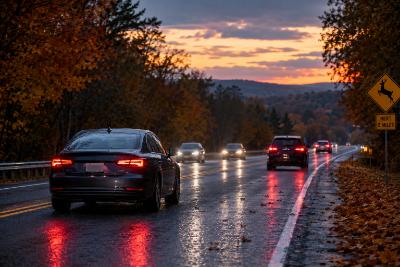
During summer, you may complete your evening commute, school pickup, shopping trip, or other errands while the sun is still up. As fall progresses, that same trip may occur during twilight or after sunset. The road has not changed, but your ability to see and identify hazards may change quickly.
Dusk can be difficult because the sky may still appear bright while the road surface, shoulders, sidewalks, and surrounding areas become much darker. That contrast can make it harder to notice a pedestrian near a crosswalk, a cyclist near the edge of a lane, a dark-colored vehicle ahead, or a car entering from a side street.
Low sun angles can also create glare. Near sunrise or sunset, direct sunlight can reduce contrast through your windshield and make traffic signals, brake lights, pedestrians, and vehicles harder to see. After sunset, headlights from approaching vehicles can create another source of glare. A dirty, fogged, or damaged windshield can make glare more distracting by scattering light across your field of vision.
Stillwater includes commuter traffic, Oklahoma State University traffic, pedestrians, cyclists, delivery vehicles, rideshare vehicles, residents, and visitors. Near the university, downtown streets, residential neighborhoods, and commercial corridors, you may need to identify several moving hazards at once.
Lower light can explain why a hazard was harder to see, but it does not automatically excuse unsafe driving. You still need to adjust your speed, following distance, and attention to the conditions you can actually see.
Mr. Murray and his team were very professional and helpful throughout this process. As my case was very unique, I knew I was going to need a very specific and special team to help me through this. My wife and I prayed about it and God led us to Murray Law Firm. During the first consultation I requested he pray with me about it and he was quick to agree and that is when I knew we had made the right decision. They went above and beyond our expectations and won the case. I would highly recommend this firm.” - Roger Buchanan The Murray Law Firm worked wonders for me and my needs. James Murray along with his staff are so helpful, understanding, and answered all my questions and concerns. James was able to work his magic and get things done in such a timely manner. James even made his self available by phone after hours when I was in such need. He put not only mine but my whole families worries and concerns at ease. Would highly recommend James Murray to anyone searching for a very good attorney!" - Tiara Rich Jamie is personal yet professional. He can put you at ease and make you feel safe and secure. He will be at your side through this most difficult time in your life and will keep you informed about what is going on in your case and what you can expect. His staff is always ready and willing to do everything the can to help you. Highly recommended." - Alicia Mayfield
Common Fall Driving Situations That Can Lead to Accidents
Shorter daylight hours do not cause every fall crash. They can make ordinary driving situations more demanding.
Rear-end collisions may occur when a driver notices slowing or stopped traffic too late. At intersections, a driver may misjudge the speed or distance of an approaching vehicle. Pedestrians and cyclists may blend into darker backgrounds, especially where street lighting is limited. On two-lane roads, curves, shoulders, disabled vehicles, animals, and debris may be harder to identify before you are close to them.
Parking lots can create another visibility problem. You may be backing out, turning across a travel lane, watching for pedestrians, and dealing with headlights from several directions. As daylight fades, the contrast between lit and unlit areas can make a person walking between vehicles harder to see.
When visibility is reduced, safer driving may include:
- Reducing your speed so you have more time to react.
- Increasing your following distance.
- Using your headlights as required and making sure all exterior lights work.
- Scanning intersections, crosswalks, shoulders, and parking-lot travel lanes carefully.
- Keeping your windshield clean inside and outside.
- Giving yourself more time when glare, darkness, rain, fog, or other conditions limit visibility.
Low Sun Glare Can Be a Serious Fall Hazard
Fall crash risk is not limited to darkness. Low sun angles can affect visibility during both the morning and evening.
If you are driving west near sunset, direct sunlight may temporarily reduce your ability to see a traffic signal, brake lights, a pedestrian, or a vehicle entering the roadway. Eastbound drivers can face the same problem near sunrise. Sunglasses, a sun visor, and a clean windshield may help reduce glare, but they do not remove the need to adjust your driving.
If you cannot see as far ahead as you normally can, maintaining the same speed may leave less time and distance to stop. Your driving should reflect the conditions that are actually visible, not the conditions you would expect in full daylight.
Personal Injury Representation Car Accident RepresentationRelated Videos
How Fault Is Evaluated After a Low-Light Crash
A crash that occurs at dusk or after dark is not automatically the fault of one driver. Oklahoma car accident claims usually depend on what each person did before the collision and whether that conduct was reasonable under the circumstances.
Questions may include whether a driver:
- Drove too fast for the available visibility.
- Followed another vehicle too closely.
- Failed to yield.
- Made an unsafe turn.
- Drove without properly functioning lights.
- Looked at a phone or became distracted.
- Drove while fatigued or impaired.
Oklahoma follows a modified comparative negligence system. If you share fault for a crash, your damages may be reduced in proportion to your percentage of negligence. Oklahoma law can bar recovery when your negligence is greater than the negligence of the person who caused the damage or greater than the combined negligence of the people or entities that caused it.
Because drivers and insurance companies may dispute fault, evidence from the scene can be especially valuable in a low-light collision.
For information about representation after a local collision, visit the Stillwater Car Accident Attorney page:
https://www.jvmlaw.com/stillwater-car-accident-attorney/
Evidence That May Matter After a Fall Car Accident
Low-light crashes often raise questions about what each driver could see, when a hazard became visible, and whether there was enough time to react. Evidence can help answer those questions.
If you can do so safely, photographs and video may document:
- Vehicle positions and damage.
- Lane markings and roadway layout.
- Streetlights and other lighting conditions.
- Traffic signals and signs.
- Road shoulders and crosswalks.
- Skid marks, debris, and visible obstructions.
- Weather and visibility at or near the time of the crash.
- Visible injuries.
A dash camera may capture the moments before impact. Nearby homes, businesses, parking areas, or traffic systems may also have video. Some systems overwrite recordings, so identifying possible video sources early can matter.
Witnesses can also be valuable when drivers give different accounts. Someone nearby may have seen whether headlights were on, whether traffic was already stopped, or whether a vehicle entered an intersection suddenly.
Medical records can document your diagnoses, treatment, restrictions, follow-up care, and the injuries attributed to the collision. Wage records, repair estimates, photographs, and insurance documents may help establish financial losses and property damage.
What to Do After a Dusk or Nighttime Crash
Your safety and medical needs should come first. Call 911 when someone may be injured, traffic is blocked, or the crash creates an immediate roadway danger. Move to a safer location when you can do so without creating another risk.
When circumstances allow:
- Photograph the vehicles, damage, roadway, traffic controls, lighting conditions, and visible injuries.
- Exchange driver and insurance information.
- Ask witnesses for names and contact information.
- Save dash camera footage, phone photographs, and other recordings in their original form.
- Seek medical care if you are injured or develop symptoms.
- Keep medical bills, repair records, insurance letters, and work-loss documents together.
- Avoid signing a broad release before you understand your injuries, losses, and available insurance coverage.
Insurance companies may request recorded statements or broad authorizations early in the claim. Before you make a decision that could affect your claim, review the guidance on dealing with insurance companies:
https://www.jvmlaw.com/dealing-with-insurance-companies/
Why Early Investigation Can Matter
Evidence from a low-light crash may not remain available for long. Video systems may overwrite footage. Vehicles may be repaired or sold. Road work may change sight lines. Witnesses may move or forget details. An early investigation can help preserve information while it is still available.
Oklahoma generally provides a two-year limitations period for many personal injury actions, but the correct deadline depends on the facts of the case. Claims involving a governmental entity or other special circumstances can involve separate notice requirements or shorter deadlines. A filing deadline should not be treated as extra time for gathering evidence.
For broader information about injury claims in the area, visit the Stillwater Personal Injury Lawyer page:
https://www.jvmlaw.com/stillwater-personal-injury-lawyer/
How an Attorney Can Help With a Fall Car Accident Claim
A fall crash may appear straightforward at first, then become more complicated when fault, visibility, insurance coverage, and medical issues are disputed.
An attorney can review the police report, photographs, video, witness accounts, vehicle damage, medical records, and insurance documents together. Legal counsel may also help you:
- Identify evidence that should be preserved.
- Communicate with insurance companies.
- Evaluate comparative-negligence arguments.
- Document medical expenses and lost income.
- Review available insurance coverage.
- Determine whether another person or entity may share responsibility.
- Identify filing deadlines that may apply to your claim.
Information about Attorney James Murray is available here:
https://www.jvmlaw.com/our-team/attorney-james-murray/
Speak With a Stillwater Car Accident Attorney
If you were injured in a fall car accident in Stillwater, Payne County, or a nearby Oklahoma community, Murray Law Firm can review the circumstances, explain the insurance and liability issues involved, and discuss deadlines that may apply.
The firm is based in Stillwater and handles car accident matters for injured people in the area. To request a consultation, call 405-338-7899 or visit:
https://www.jvmlaw.com/contact-us/
This article is for informational purposes only and is not legal advice. Consult an attorney about your specific situation.

