
Teen driver accidents can increase during summer break because more young drivers are on Stillwater roads for work, sports, lake trips, visits with friends, and Oklahoma State University area activities. If a teen causes a crash, liability may fall on the teen driver, the vehicle owner, a parent or guardian in certain situations, another negligent driver, an employer, or another party connected to the vehicle. Murray Law Firm helps injured people in Stillwater understand fault, insurance coverage, evidence, and next steps after serious car accidents.

Oklahoma car accident claims usually turn on negligence, which means someone failed to use reasonable care under the circumstances. For teen driver crashes, the facts can include distraction, speeding, passengers, license restrictions, inexperience, vehicle ownership, insurance coverage, and whether an adult allowed unsafe driving. Murray Law Firm can review the details and help you decide how to protect your claim.
Why Summer Break Can Raise Teen Driver Accident Risks in Stillwater 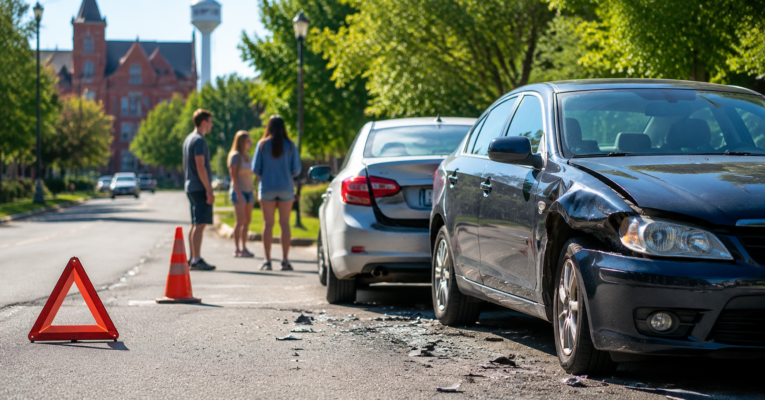
Summer changes daily driving patterns in Stillwater. School schedules loosen, teens may drive more often during the day, and families may rely on young drivers to get to work, practices, volunteer activities, summer classes, camps, and social plans. Roads near neighborhoods, restaurants, parks, lake routes, and campus areas can see local drivers, visiting families, cyclists, pedestrians, delivery vehicles, and out-of-town traffic.
Teen drivers are not automatically careless, and many young drivers take safety seriously. The risk comes from limited experience. A teen may be licensed but still learning how to judge speed, gaps in traffic, left turns, highway merging, and sudden stops. Summer can add distractions, such as friends in the car, music, phone use, unfamiliar routes, late-night plans, and fatigue.
Common teen-related crash scenarios include:
- A teen rear-ends another vehicle after looking at a phone near a stoplight.
- A young driver turns left without enough time to clear oncoming traffic.
- A teen drives too fast on a rural Payne County road and loses control.
- Several passengers distract a new driver during a short trip across town.
Oklahoma Attorney Oklahoma Attorney
James V. Murray

Spencer Allred, Esq.
Who Can Be Held Liable After a Teen Driver Accident?
The Teen Driver
The most direct claim is often against the teen driver who caused the crash. A teen may be negligent if they speed, fail to yield, follow too closely, text while driving, run a red light, drive while impaired, ignore traffic signs, or fail to control the vehicle.
In Oklahoma, a driver’s age does not erase the duty to drive carefully. If a teen driver violates traffic laws or behaves unreasonably, the injured person may be able to bring an injury claim through the teen’s available insurance coverage.
The Parent or Guardian
Parents often ask whether they can be responsible for a crash caused by their child. Injured people often ask the same question from the other side. The answer depends on the facts.
A parent or guardian may be connected to liability when they signed documents related to the minor’s driving privileges, owned the vehicle, insured the vehicle, negligently entrusted the vehicle to an unsafe driver, or failed to respond to known dangerous driving behavior. Negligent entrustment can matter if an adult allowed a teen to drive despite knowing the teen was unlicensed, impaired, reckless, repeatedly unsafe, or not fit to operate the vehicle at that time.
For example, a parent may face closer scrutiny if the teen had multiple prior speeding incidents, had been warned not to drive with passengers, or had a known history of using a phone behind the wheel. The legal question is not simply whether the parent is the parent. The question is what the parent knew, what control the parent had, and whether the parent’s choices contributed to the crash.
Mr. Murray and his team were very professional and helpful throughout this process. As my case was very unique, I knew I was going to need a very specific and special team to help me through this. My wife and I prayed about it and God led us to Murray Law Firm. During the first consultation I requested he pray with me about it and he was quick to agree and that is when I knew we had made the right decision. They went above and beyond our expectations and won the case. I would highly recommend this firm.” - Roger Buchanan The Murray Law Firm worked wonders for me and my needs. James Murray along with his staff are so helpful, understanding, and answered all my questions and concerns. James was able to work his magic and get things done in such a timely manner. James even made his self available by phone after hours when I was in such need. He put not only mine but my whole families worries and concerns at ease. Would highly recommend James Murray to anyone searching for a very good attorney!" - Tiara Rich Jamie is personal yet professional. He can put you at ease and make you feel safe and secure. He will be at your side through this most difficult time in your life and will keep you informed about what is going on in your case and what you can expect. His staff is always ready and willing to do everything the can to help you. Highly recommended." - Alicia Mayfield
The Vehicle Owner
Sometimes the teen is driving a car owned by a parent, grandparent, friend, or another household member. Vehicle ownership can affect insurance coverage and potential liability. The owner may not be liable in every case, but ownership helps identify insurance policies and may support claims involving permission, maintenance, or negligent entrustment.
If the vehicle had unsafe brakes, worn tires, defective lights, or other known problems, the owner’s maintenance decisions may become relevant.
Another Driver
A teen driver may be involved in a crash without being the only negligent person. Another driver may cut off the teen, run a red light, speed through an intersection, or force evasive action. In multi-vehicle collisions, fault may be shared.
Oklahoma uses comparative negligence principles, which means fault can be divided among responsible parties. If an insurance company tries to blame the teen, the injured person, or another driver unfairly, evidence can help show each party’s actual role.
Personal Injury Representation Car Accident RepresentationRelated Videos
An Employer
Some teens work summer jobs that require driving. If a teen causes a crash while making deliveries, running work errands, transporting equipment, or driving as part of a job, an employer may need to be reviewed. Liability may depend on whether the teen was acting within the scope of employment, whether the employer allowed unsafe driving, and what insurance applied.
This can be especially important when a personal vehicle is used for work. The teen’s personal auto policy may raise coverage questions, and a business policy may also need review.
How Oklahoma’s Teen Driving Rules May Affect a Claim
Oklahoma’s Graduated Driver License program phases in driving privileges for teen drivers as they gain experience. Restrictions can involve driving stages, supervision, passengers, and other conditions for younger drivers. If a teen violated a license restriction before a crash, that violation may help explain unsafe conduct, but it does not automatically decide every liability issue.
For instance, if a teen had too many passengers in the vehicle, an attorney may examine whether passenger distraction contributed to the crash. If the teen was driving late at night, the timeline may matter.
Insurance companies may focus on the violation that helps them most. A good investigation looks at the whole picture, including speed, lane position, visibility, road design, vehicle condition, phone records, witness accounts, and crash damage.
What Evidence Matters Most?
Teen driver accident claims often depend on details that can disappear quickly. Vehicles may be repaired, phones may be replaced, social media posts may be deleted, and witnesses may forget what they saw.
Useful evidence may include:
- Police reports and crash diagrams
- Photos and videos of the vehicles, injuries, skid marks, debris, and intersection
- Witness names and contact information
- Traffic camera, dashcam, store camera, or neighborhood camera footage
- Cell phone records when distraction is disputed
- Vehicle ownership and insurance information
- Driver’s license status and restrictions
- Maintenance records
- Medical records and bills
- Proof of lost wages or missed school obligations
- Notes about pain, limitations, appointments, and recovery
If the crash happened near a business, apartment complex, school area, or public roadway camera, time matters. Video may be overwritten in days. An attorney can send preservation requests and help gather evidence before it is lost.
What Compensation May Be Available?
Compensation depends on injuries, medical treatment, fault, insurance coverage, and the effect on daily life. A claim may include medical bills, future treatment, lost wages, reduced earning capacity, pain and suffering, vehicle damage, out-of-pocket costs, and other losses supported by evidence.
Families should be careful with early settlement offers. Some injuries, such as concussions, neck injuries, back injuries, knee injuries, and shoulder injuries, may take time to diagnose fully. A fast offer may not reflect future treatment, therapy, missed work, or long-term pain.
For a broader look at damages after a crash, the damages in a car accident claim page at https://www.jvmlaw.com/damages-in-a-car-accident-claim/ may help. If you need help understanding claim value, the car accident claim value page at https://www.jvmlaw.com/car-accident-claim-value/ explains common factors.
What Should You Do After a Teen Driver Crash in Stillwater?
Start with safety and medical care. Call 911 if anyone is hurt or if the crash blocks traffic. Even if symptoms seem mild, get checked by a medical professional. Some injuries become more obvious after adrenaline fades.
Next, take practical steps:
- Exchange insurance and contact information.
- Photograph the scene, vehicles, license plates, injuries, and nearby signs.
- Get names and phone numbers for witnesses.
- Avoid arguing about fault at the scene.
- Do not post about the accident on social media.
- Keep all medical records, repair estimates, receipts, and insurance letters.
- Speak with an attorney before giving a recorded statement to the other insurer.
For more local guidance, visit the Stillwater car accident tips page at https://www.jvmlaw.com/stillwater-car-accident-tips/ and the Stillwater personal injury lawyer page at https://www.jvmlaw.com/stillwater-personal-injury-lawyer/.
How an Attorney Can Help
A teen driver crash can involve more than one policy, more than one driver, and sensitive family issues. An attorney can identify who may be legally responsible, review insurance coverage, gather evidence, communicate with adjusters, calculate damages, and prepare the claim for negotiation or litigation when needed.
Legal help can also reduce pressure during a stressful time. Injured people should not have to manage medical appointments, transportation problems, missed work, repair issues, and insurance calls alone.
Speak With a Stillwater Car Accident Attorney
If you or your child was injured in a summer break teen driver accident in Stillwater or nearby Payne County, Murray Law Firm can review what happened and explain your options. The firm offers free consultations and helps injured Oklahomans understand fault, insurance, evidence, and next steps.
To discuss a crash, contact Murray Law Firm through https://www.jvmlaw.com/contact-us/ or learn more about the team at https://www.jvmlaw.com/our-team/.
This article is for informational purposes only and is not legal advice. Consult an attorney about your specific situation.