
Yes. Dashcam footage can help prove fault after an Oklahoma car accident when the recording clearly captures events before, during, or immediately after the collision. Video may show a traffic signal, unsafe lane change, failure to yield, sudden braking, vehicle position, road conditions, or a driver leaving the scene.
Dashcam footage is strongest when you preserve the original file and compare it with other evidence, including the crash report, witness statements, photographs, vehicle damage, medical records, and available electronic data. Murray Law Firm helps injured people in Stillwater, Oklahoma, and nearby areas evaluate fault disputes, insurance issues, and evidence after serious car accidents.
A recording does not automatically decide liability. Camera angle, glare, darkness, missing frames, audio quality, timestamps, and events outside the camera’s field of view can affect what the footage proves. Oklahoma comparative negligence rules can also make video especially useful when more than one driver is accused of contributing to a collision.
Why Dashcam Footage Can Matter After an Oklahoma Car Accident 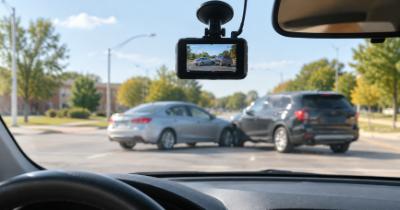
Car accident claims often begin with different accounts of the same event. One driver may say that the light was green. Another may claim that a lane change was complete before impact. A driver may insist that another vehicle stopped without warning, crossed the center line, or entered traffic without yielding.
A dashcam can provide a visual record of those critical seconds. Depending on the camera placement and recording quality, footage may show:
- Traffic lights, stop signs, lane markings, and right-of-way conditions
- The movement and position of vehicles before impact
- A sudden lane change, turn, merge, or stop
- Following distance and visible braking
- Debris, standing water, construction, or another roadway hazard
- A pedestrian, bicyclist, or third vehicle involved in the sequence
- The direction a hit-and-run vehicle traveled after the crash
- Statements or conduct immediately after the collision when audio is recorded
For a Stillwater crash, video may be especially useful at busy intersections, around Oklahoma State University traffic, or anywhere several vehicles enter the same conflict point within seconds.
What Dashcam Footage Cannot Prove by Itself
Video evidence can be persuasive without being complete. A front-facing camera sees only part of the roadway. It may not capture a vehicle approaching from the side, a motorcycle behind your car, a pedestrian outside the frame, or a driver’s conduct before the recording begins.
Footage can also leave questions unresolved. Sun glare can hide a traffic signal. Nighttime video may not show lane markings clearly. A wide-angle lens can affect how distance appears. A clock inside the recording may be wrong if the device was never reset.
That is why a dashcam file should be reviewed with the rest of the evidence. A Stillwater car accident attorney can compare the recording with scene photographs, witness statements, crash reports, vehicle damage, nearby surveillance footage, event data recorder information, and other available records.
https://www.jvmlaw.com/stillwater-car-accident-attorney/
Oklahoma Attorney Oklahoma Attorney
James V. Murray

Spencer Allred, Esq.
How Oklahoma Comparative Negligence Can Make Video More Important
Oklahoma uses modified comparative negligence. Under 23 O.S. §§ 13 and 14, an injured person’s negligence does not bar recovery unless that person’s negligence is greater than the negligence of the person or people responsible for the harm. When recovery is allowed, the amount is reduced in proportion to the injured person’s assigned percentage of negligence.
Official Oklahoma statute source:
https://www.oklegislature.gov/OK_Statutes/CompleteTitles/os23.pdf
That rule can make a few seconds of dashcam footage especially meaningful.
Imagine that another driver turns left across your lane in Stillwater. The other insurer may accept that the turn occurred but argue that you were speeding or failed to react in time. A dashcam may show traffic flow, the distance between vehicles, the timing of the turn, your braking, and whether there was a realistic opportunity to avoid the impact.
The recording may not resolve every issue, but it can help test a comparative-fault argument against visual evidence rather than leaving the dispute to competing recollections.
Mr. Murray and his team were very professional and helpful throughout this process. As my case was very unique, I knew I was going to need a very specific and special team to help me through this. My wife and I prayed about it and God led us to Murray Law Firm. During the first consultation I requested he pray with me about it and he was quick to agree and that is when I knew we had made the right decision. They went above and beyond our expectations and won the case. I would highly recommend this firm.” - Roger Buchanan The Murray Law Firm worked wonders for me and my needs. James Murray along with his staff are so helpful, understanding, and answered all my questions and concerns. James was able to work his magic and get things done in such a timely manner. James even made his self available by phone after hours when I was in such need. He put not only mine but my whole families worries and concerns at ease. Would highly recommend James Murray to anyone searching for a very good attorney!" - Tiara Rich Jamie is personal yet professional. He can put you at ease and make you feel safe and secure. He will be at your side through this most difficult time in your life and will keep you informed about what is going on in your case and what you can expect. His staff is always ready and willing to do everything the can to help you. Highly recommended." - Alicia Mayfield
Preserve the Original Dashcam File
If your dashcam recorded a collision, preserve the complete original recording as soon as possible. Many devices record on a loop and may overwrite older files when storage becomes full.
Useful preservation steps include:
- Remove or lock the relevant file so the camera does not overwrite it
- Save a separate backup to a computer or secure cloud account
- Keep the original memory card when practical
- Preserve several minutes before and after the collision, not only the moment of impact
- Do not trim, filter, add captions, change playback speed, or alter the original file
- Keep information showing the camera model, date and time settings, and original file name
- Avoid posting the footage on social media while a claim is pending
Preserve the full original recording before editing, sharing, or uploading copies. The unaltered file can provide context that a short clip may leave out.
Digital evidence can disappear much sooner than the deadline for filing a lawsuit. Camera footage may be overwritten, vehicles can be repaired, and other electronic information may be lost if nobody takes steps to preserve it.
Why the Original File Can Matter for Authentication
If dashcam footage becomes evidence in a lawsuit, a party may need to show that the recording is what the party claims it is. Oklahoma’s evidence rules address authentication in 12 O.S. § 2901.
Keeping the original file, original memory card when practical, device information, file name, date and time settings, and an unedited backup can help preserve information that may later be relevant when the recording is evaluated.
Official Oklahoma evidence statute source:
https://www.oklegislature.gov/OK_Statutes/CompleteTitles/os12.pdf
Authentication does not mean that every dashcam recording will be admitted into evidence or prove fault. Admissibility can depend on the facts, the purpose for which the recording is offered, and other evidentiary rules.
Personal Injury Representation Car Accident RepresentationRelated Videos
Can an Insurance Company Challenge Dashcam Video?
Yes. An insurer can dispute what video means even when the file clearly exists. The adjuster may argue that the camera angle is incomplete, the timestamp is inaccurate, the video does not establish speed, the recording begins too late, or another fact outside the frame changes the liability analysis.
The insurer may also use the same footage to look for conduct by the injured driver. For example, video might show close following distance, a late entry into an intersection, a lane change, or time to react. Review the complete recording before making broad statements about what it proves.
You can also review the firm’s guidance about dealing with insurance companies after an accident:
https://www.jvmlaw.com/dealing-with-insurance-companies/
What If the Other Driver Has the Dashcam?
Useful video does not have to come from your vehicle. Another driver, rideshare vehicle, commercial truck, nearby business, private residence, traffic camera, or witness may have recorded part of the crash.
Digital recordings can disappear quickly. Some systems overwrite footage automatically. A vehicle may be repaired, sold, or returned to a fleet. A business may retain surveillance video for only a limited period.
If you know or reasonably suspect that another source recorded the collision, identify it early. An attorney may be able to send a preservation request and seek the recording through the insurance claim or litigation process when the law permits.
Dashcam Footage Works Best With Other Evidence
A car accident claim should not rely on one file when other reliable proof is available. Dashcam footage can help explain how the collision happened, while medical and financial records can document what followed.
Supporting evidence may include:
- The police or crash report
- Photographs of the vehicles and roadway
- Witness names and contact information
- Repair estimates
- Medical records
- Medical bills
- Wage and employment records
- Insurance correspondence
- Receipts for crash-related expenses
- Nearby surveillance footage
- Vehicle event data when available
If medical expenses are becoming difficult to track, the firm’s information about car accident medical bills explains issues that can arise after a collision:
https://www.jvmlaw.com/car-accident-medical-bills/
Information about lost wages and other documented financial losses is also available in the firm’s resource on car accident economic damages:
https://www.jvmlaw.com/car-accident-economic-damages/
How Long Should You Keep Dashcam Evidence?
Keep the original file and backups while the claim remains unresolved and longer if your attorney advises you to do so. Do not assume that a lawsuit filing deadline tells you how long evidence will remain available.
Oklahoma law generally provides a two-year limitations period for many personal injury actions under 12 O.S. § 95. Exceptions can change the deadline. Claims involving the State of Oklahoma or a political subdivision can also involve separate notice requirements. Under 51 O.S. § 156, qualifying claims within the Oklahoma Governmental Tort Claims Act generally must be presented within one year after the loss, subject to statutory exceptions.
Official Oklahoma statute sources:
https://www.oklegislature.gov/OK_Statutes/CompleteTitles/os12.pdf
https://www.oklegislature.gov/OK_Statutes/CompleteTitles/os51.pdf
The practical deadline for preserving evidence is often much earlier. Dashcam footage can be overwritten, nearby surveillance can be deleted, vehicles can be repaired, and witnesses can become harder to locate long before a filing deadline expires.
How a Stillwater Car Accident Attorney Can Help
Dashcam evidence can look straightforward until fault, insurance coverage, injuries, authenticity, or the meaning of the recording becomes disputed. An attorney can review the complete file in context, identify missing evidence, contact witnesses, request other available video, examine insurance coverage, and evaluate comparative-negligence arguments.
Legal counsel may also help preserve electronic evidence before it is overwritten and organize records related to medical expenses, lost income, property damage, and other documented losses.
Learn more about Attorney James Murray:
https://www.jvmlaw.com/our-team/attorney-james-murray/
Speak With Murray Law Firm About Dashcam Evidence
If you were injured in an Oklahoma car accident and have dashcam footage, do not assume that the video speaks for itself. Murray Law Firm can review the recording with other available evidence, explain how Oklahoma fault rules may apply, and discuss steps for preserving digital material.
Murray Law Firm serves people in Stillwater, Oklahoma, and nearby areas. To request a consultation, visit:
https://www.jvmlaw.com/contact-us/
Call (405) 338-7899:
tel:+14053387899
This article is for informational purposes only and is not legal advice. Consult an attorney about your specific situation.

